Every year, I do the same ritual: sending my manager a story of what I did. This year, I wanted to do something different. Not a polished deck. Not a PDF. Something that felt like it arrived in the mail — that had weight to it before you even read a word.
Figma is the language of intention. You draw what you already know you want. But code — especially AI-assisted code — is a medium with its own physics. You can describe a feeling and watch something surprising emerge. You can prototype tactility. You can make things that breathe.
So instead of designing the year-end reflection in Figma, I built it in the browser — using AI as a creative collaborator throughout. Not to generate content, but to help me build interactions and atmospheres that would have taken weeks to engineer by hand.
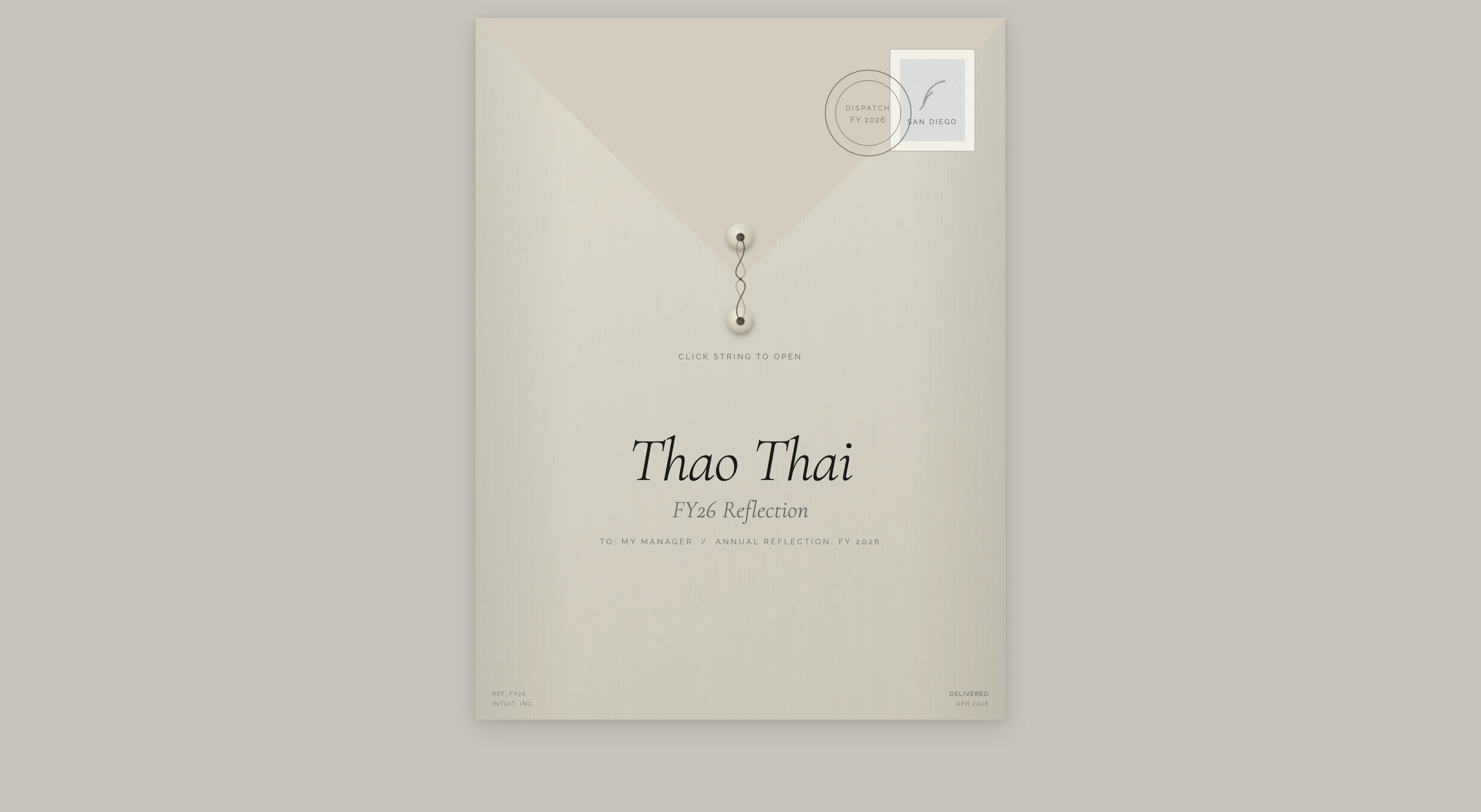
The result is something that lives between digital and physical: a kraft paper envelope, sealed with a string-and-button closure, addressed to my manager. You unwind the string. The flap lifts. Inside is a book.
The piece opens as an envelope — complete with a San Diego postmark, a stamp cluster, and a handwritten address. There's a single interaction cue: click string to open. No instructions beyond that. The delight is in the discovery.
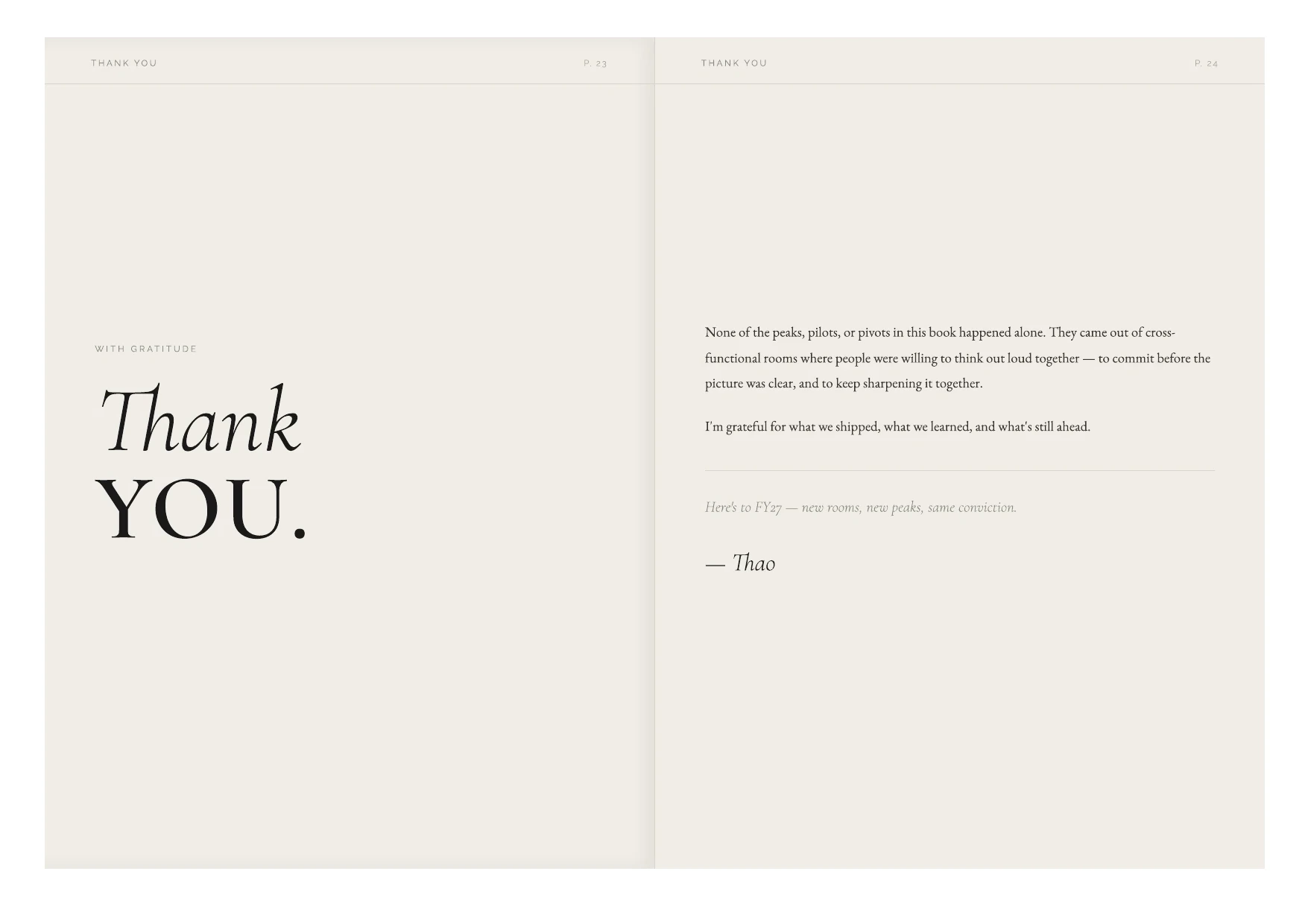
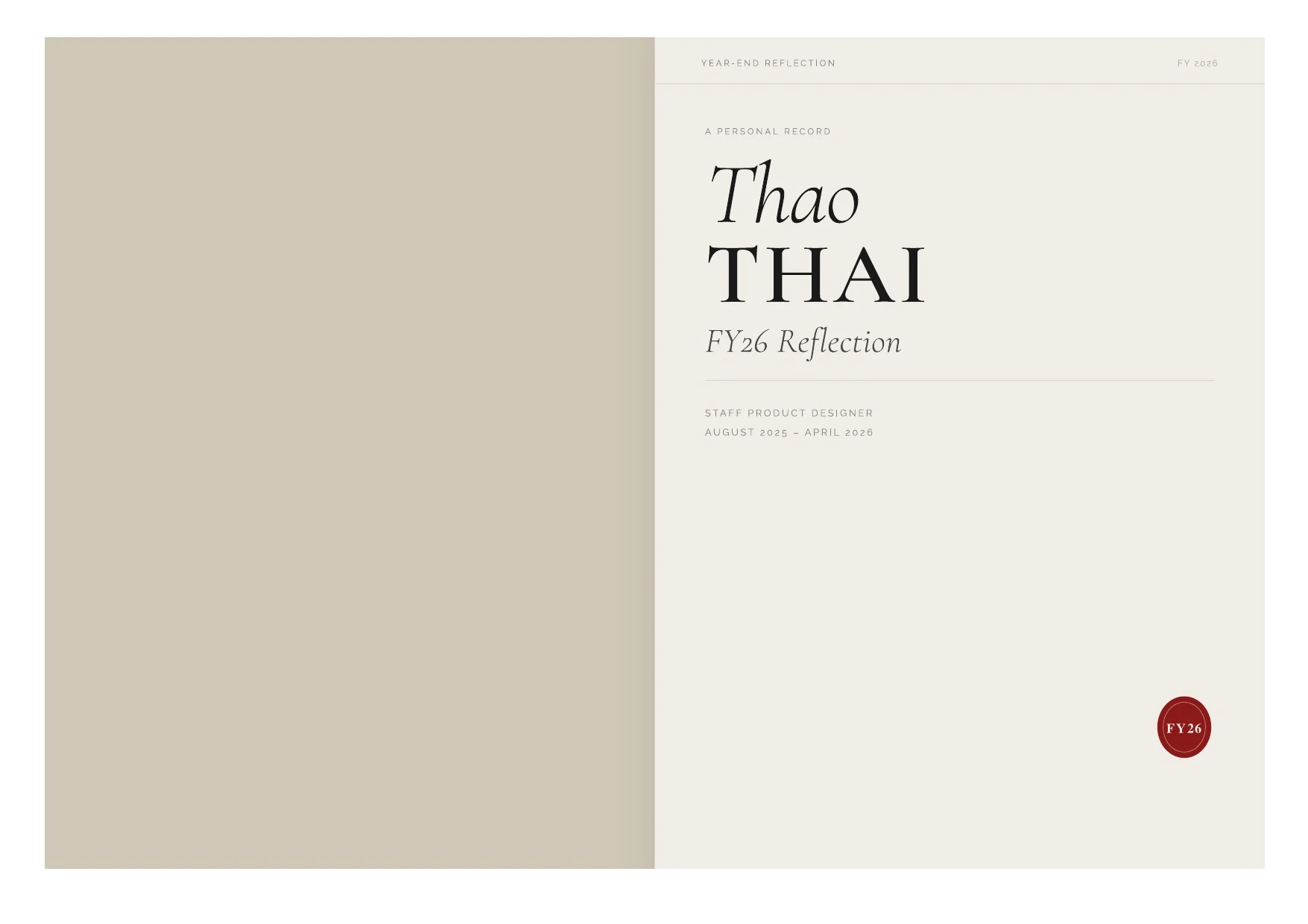
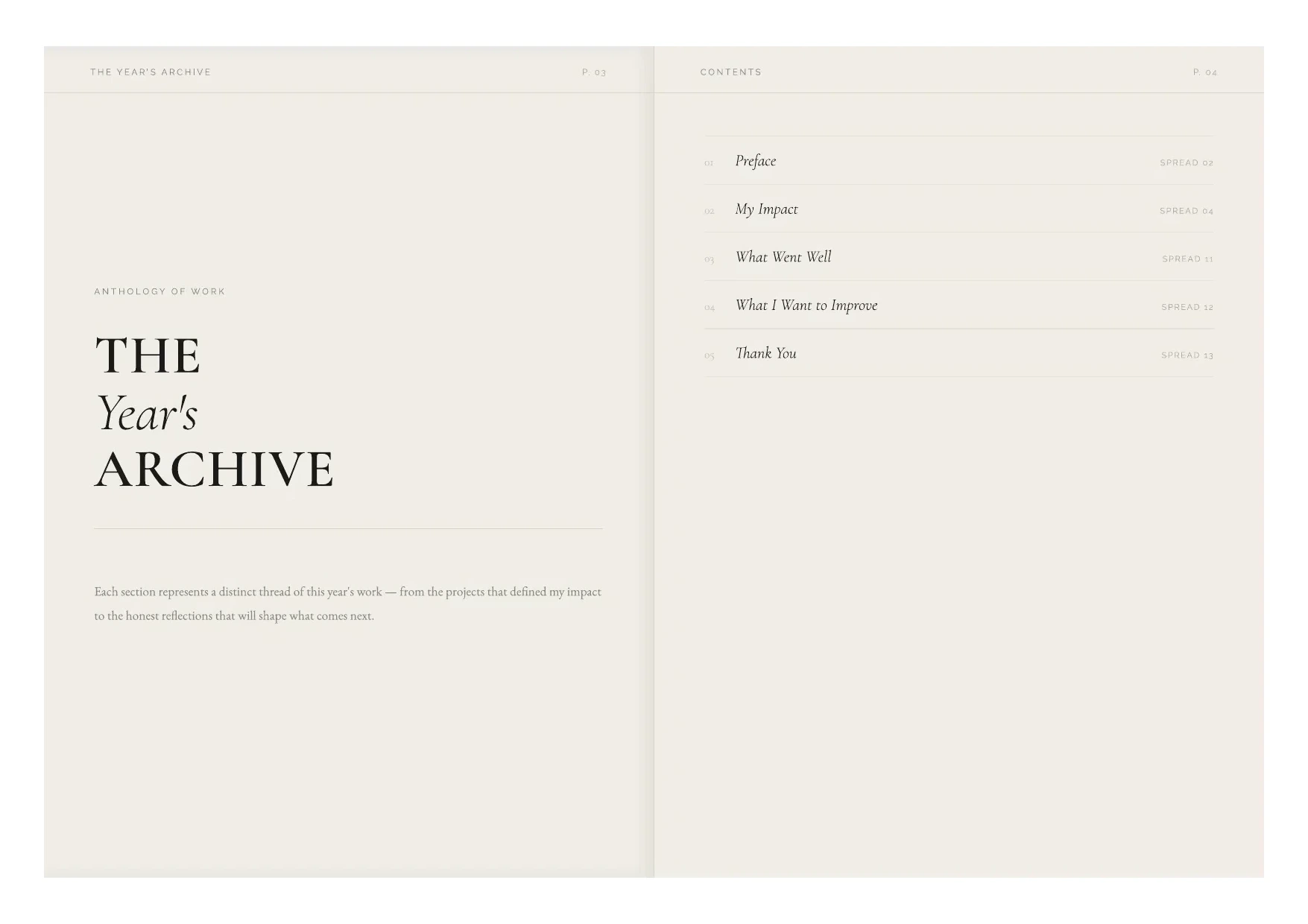
The emotional register shifts deliberately as you move through it — from the formal heft of the cover, to the intimacy of the opening letter, to the specificity of the work, to the warmth of the thank you.
Most year-end reviews answer questions someone else wrote. This one was made to make someone feel something. The envelope, the string closure, the book that waits inside — none of it was asked for. That's the point. By the time you read the first word, you already know this wasn't templated. That's the kind of designer I want to be: one who brings that quality of attention even when — especially when — no one required it.