The question wasn't whether to build it
In 2021, Uplight — a SaaS company serving energy providers — wanted to expand into native mobile apps. The target: utility customers. The ambition: something nobody in the industry had really done well.
Utility apps existed. But they were joyless, confusing, and built around the company's needs rather than the customer's. I framed it early: imagine a banking app, but for utilities. One centralized platform. Essential features done right. And the intelligence to make each experience feel personal.
What the research told us
We ran a customer survey with 100 participants, conducted 50 user interviews, and did heuristic reviews across 5+ utility websites to uncover opportunities.
Three things came back clearly. Customers are deeply skeptical of utilities when it comes to transparency and trust. The monthly bill was described again and again as "a good guess at best, a bad surprise at worst." Utility billing felt complex and deliberately opaque.
The existing digital experiences made it worse. Jargon everywhere. Clunky interfaces. The kind of UX that makes you feel like you're navigating a government portal from 2009.
What we built
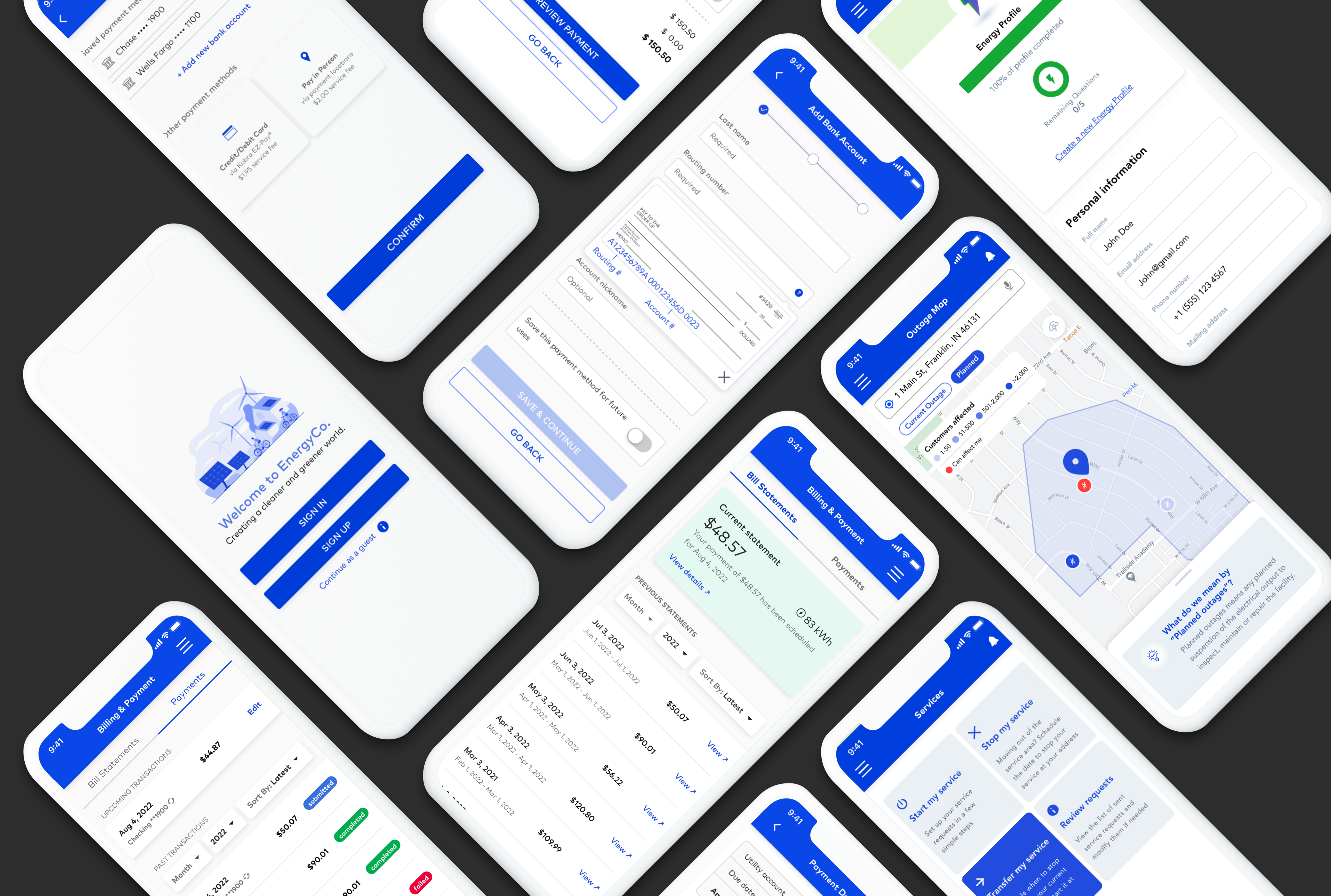
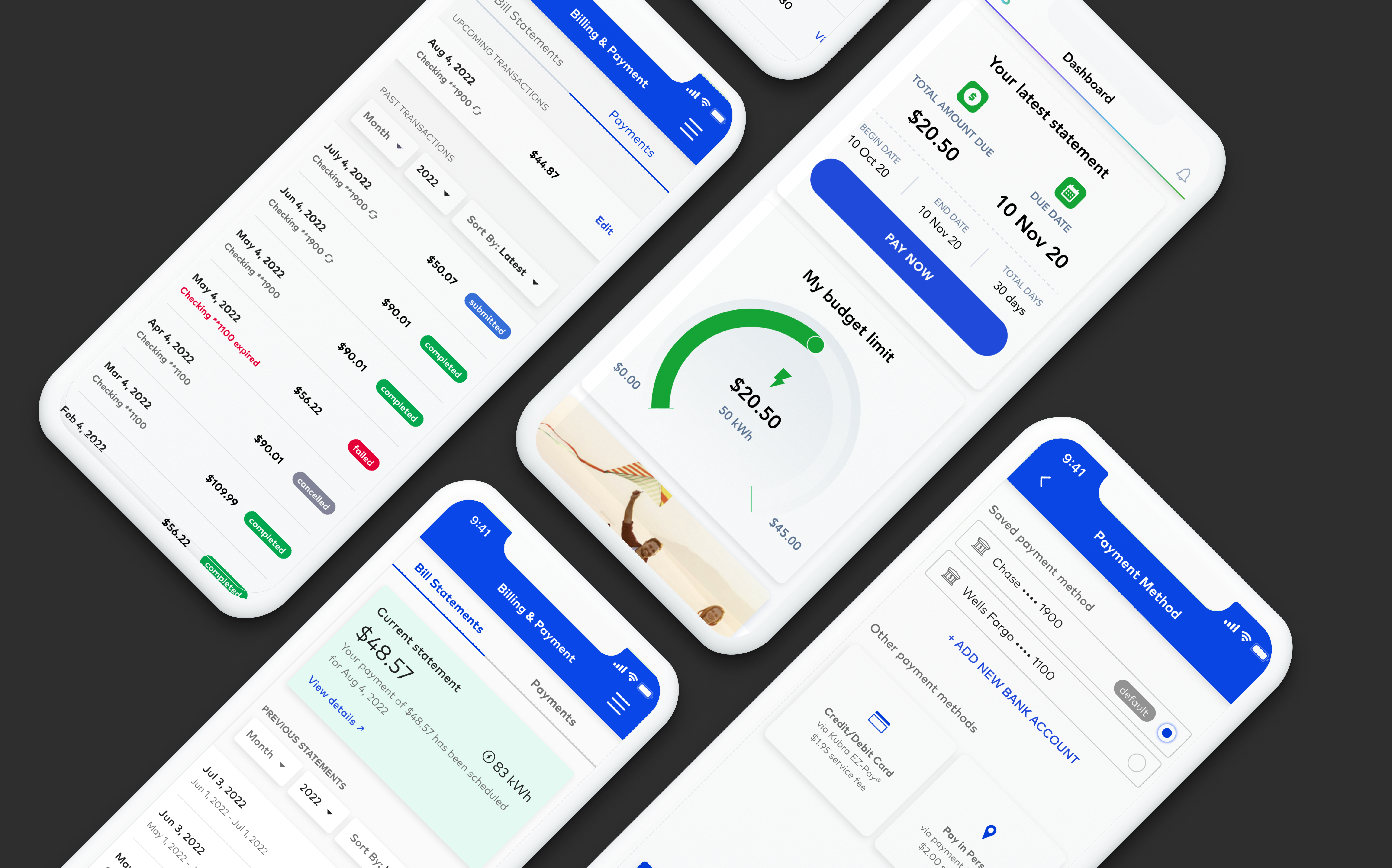
The four pillars — billing & payment, start/stop/transfer of service, outage awareness, and account management — came directly from customers ranking what mattered most. We built them first, with the visual clarity you'd expect from a consumer fintech app.
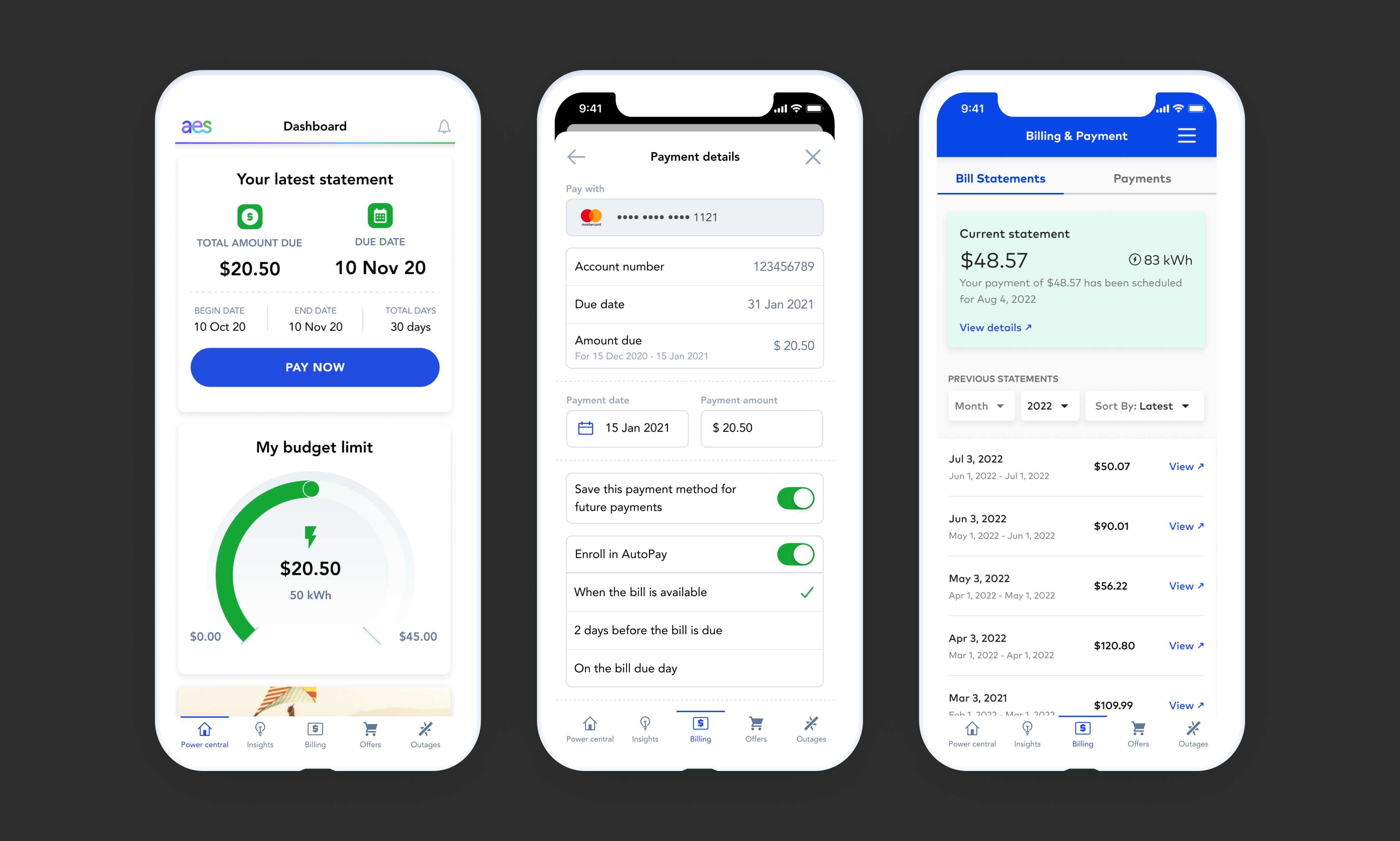
The dashboard surfaces the current statement, due date, and payment status at a glance. The billing & payment flow is modern: saved methods, autopay with a maximum cap to avoid surprises, contextual alerts when a bill runs high. Payment history is filterable and readable — the kind of transparency utility customers had never had before.
Energy budgeting
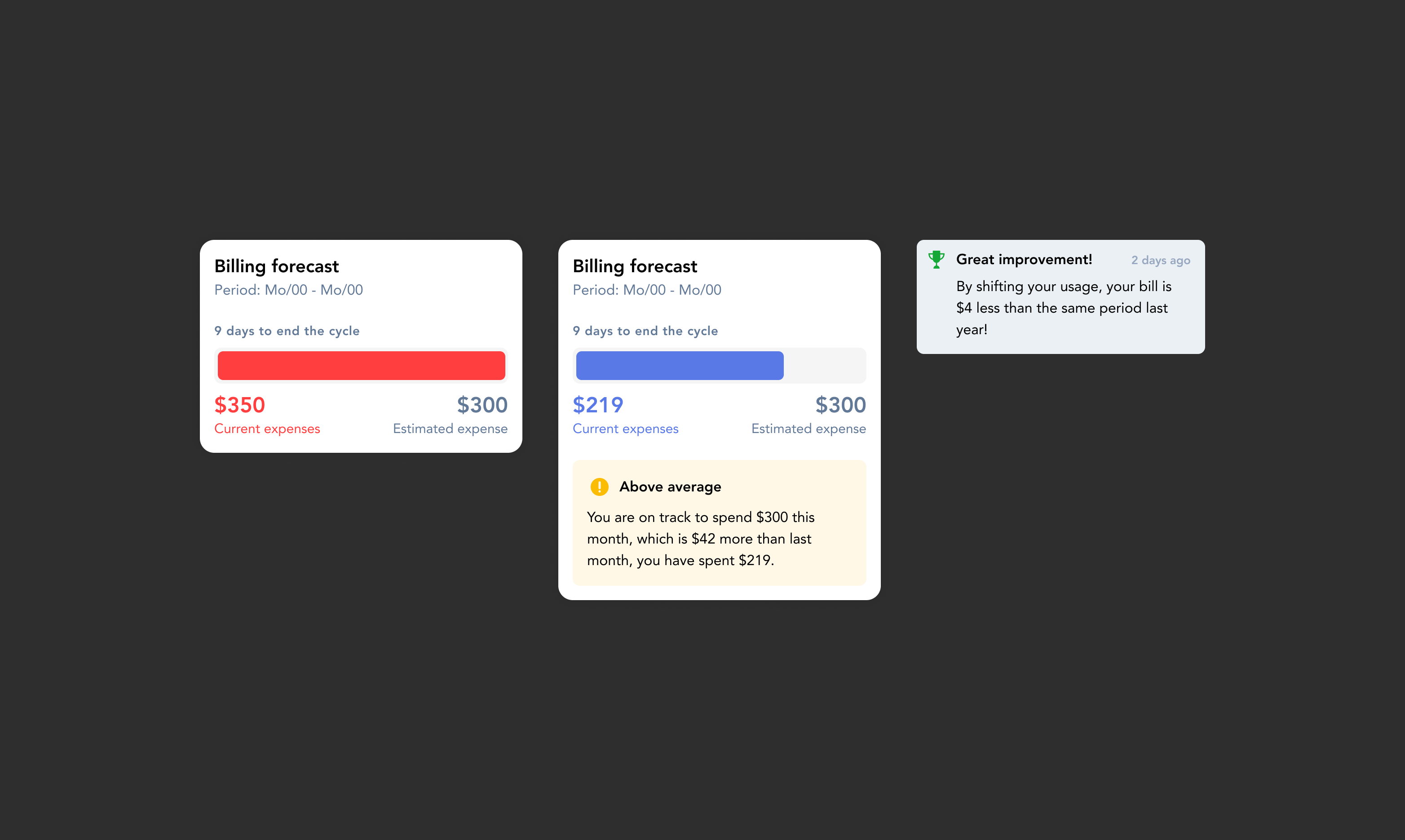
We designed an energy budgeting feature with a billing forecast and progress bar, inspired by how Mint frames personal finance. But where Mint shows spending categories, we showed energy trajectory — and what it meant. "You are on track to spend $300 this month, which is $42 more than last month." Or: "You are using less energy than usual — have you implemented any new Energy Conservation Measures?"
The tone is a coach, not a meter reader. That distinction changed everything about how customers experienced their utility relationship.
Transactions → Relationships
Utilities had always optimized for the transaction — the bill paid, the service started, the outage resolved. The proliferation of smart metering systems gives utilities extremely granular information about usage patterns, but none of it was being made useful to the people it concerned most. What we were designing was the layer on top: the ongoing experience of feeling like your energy provider knows you, respects your time, and actually wants to help you spend less.
Design systems for scalability
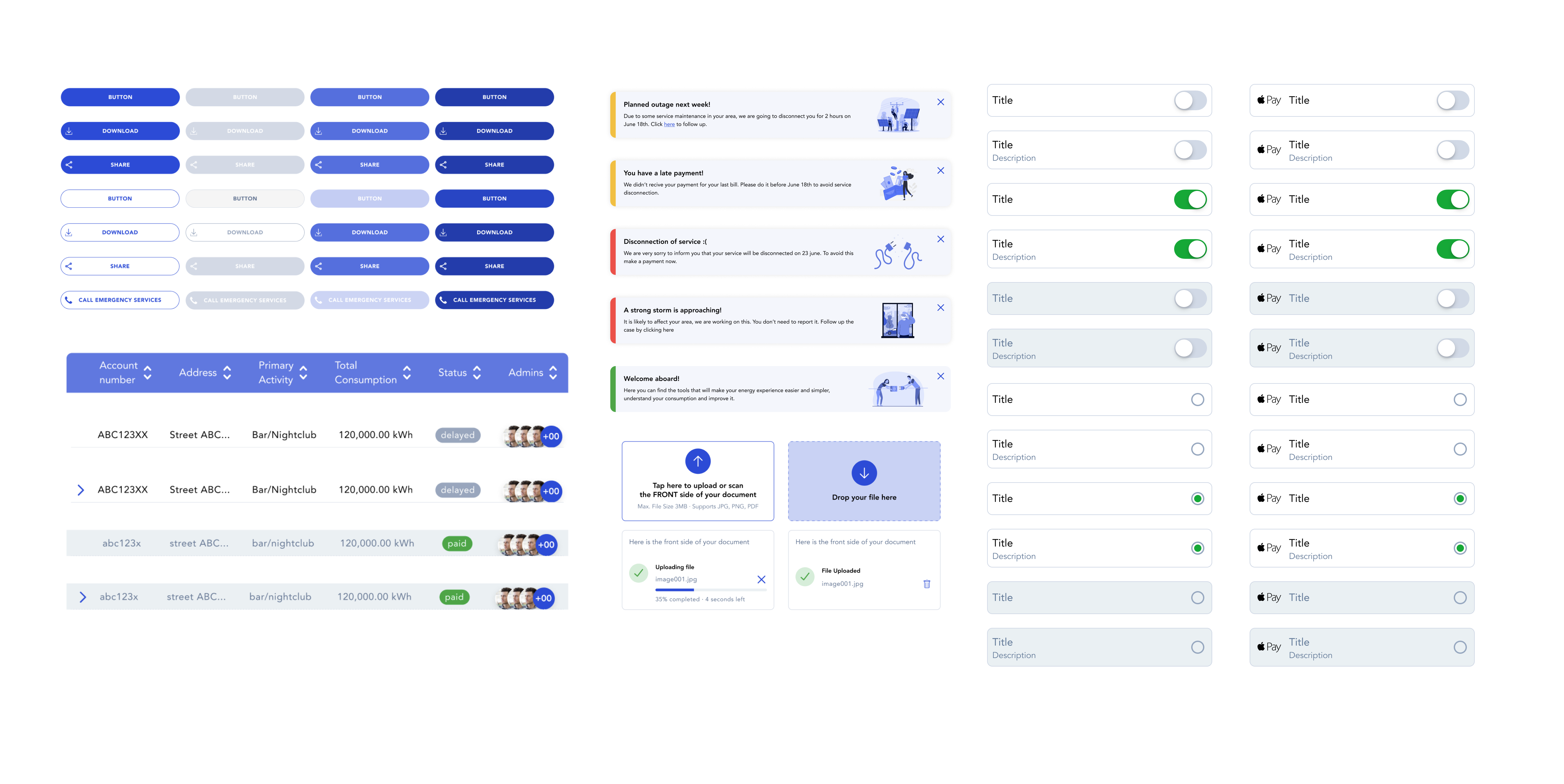
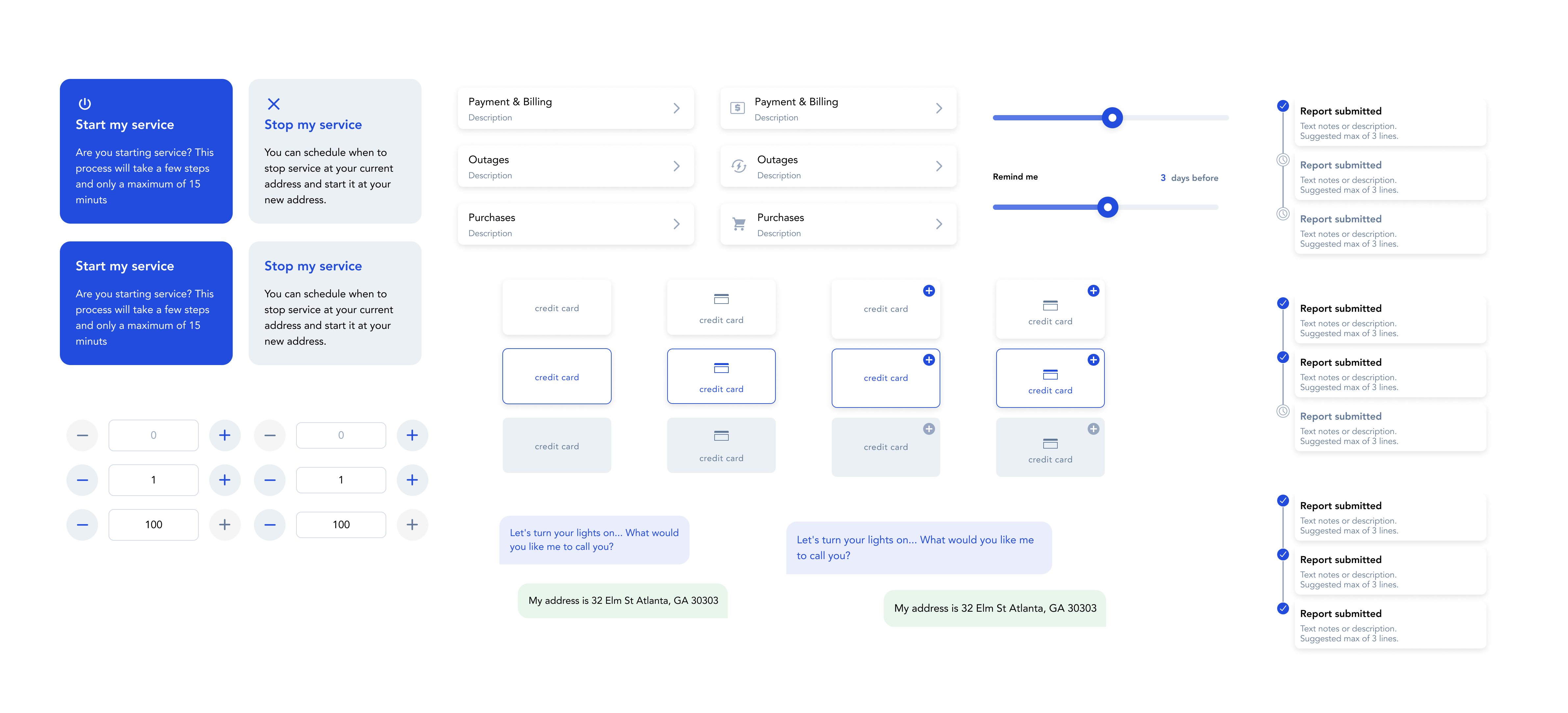
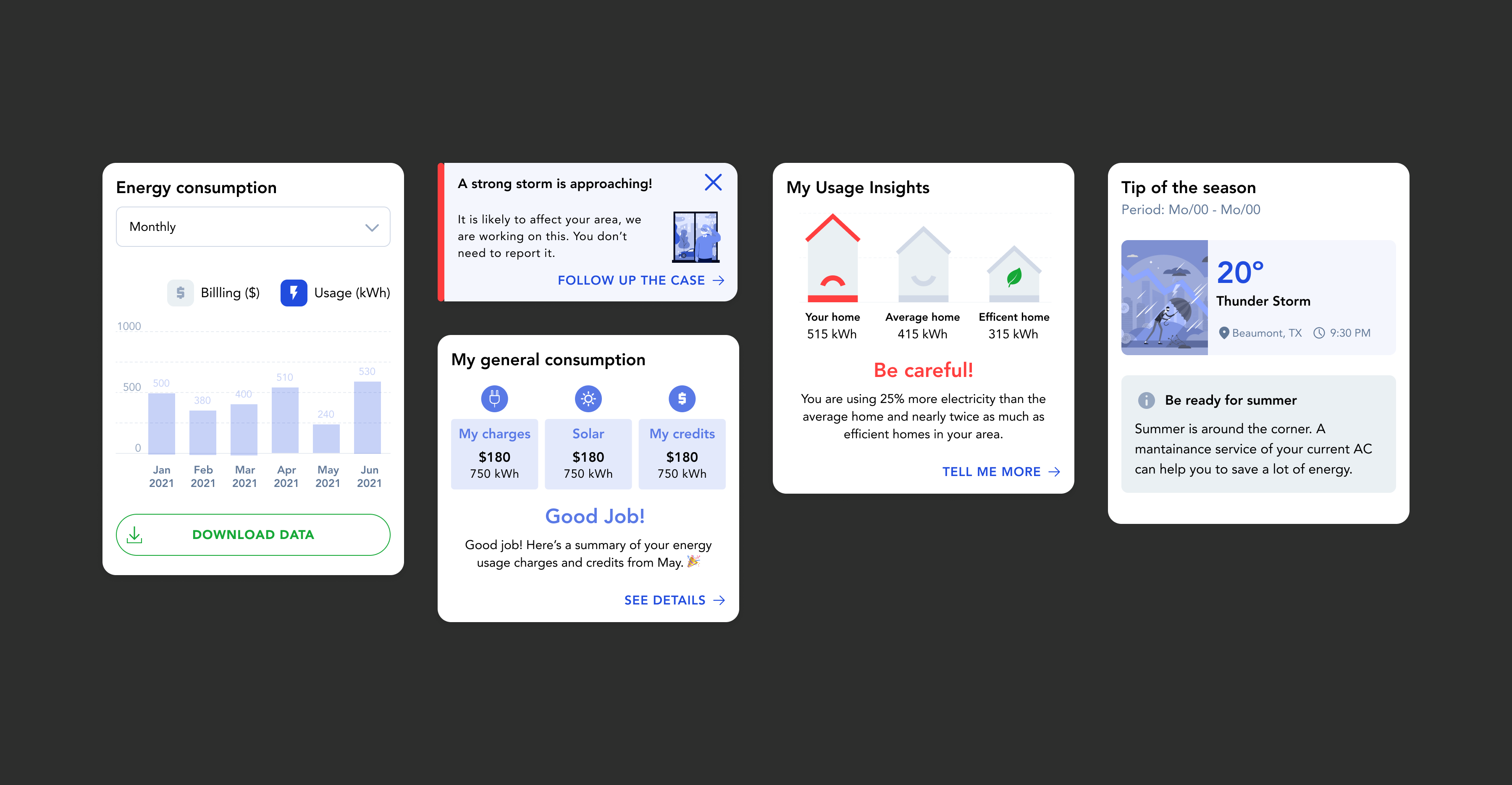
To ship this consistently across a product team — and eventually across Uplight's other utility client implementations — I built the DCX Design System: components, interaction states, and patterns that could scale without drifting.